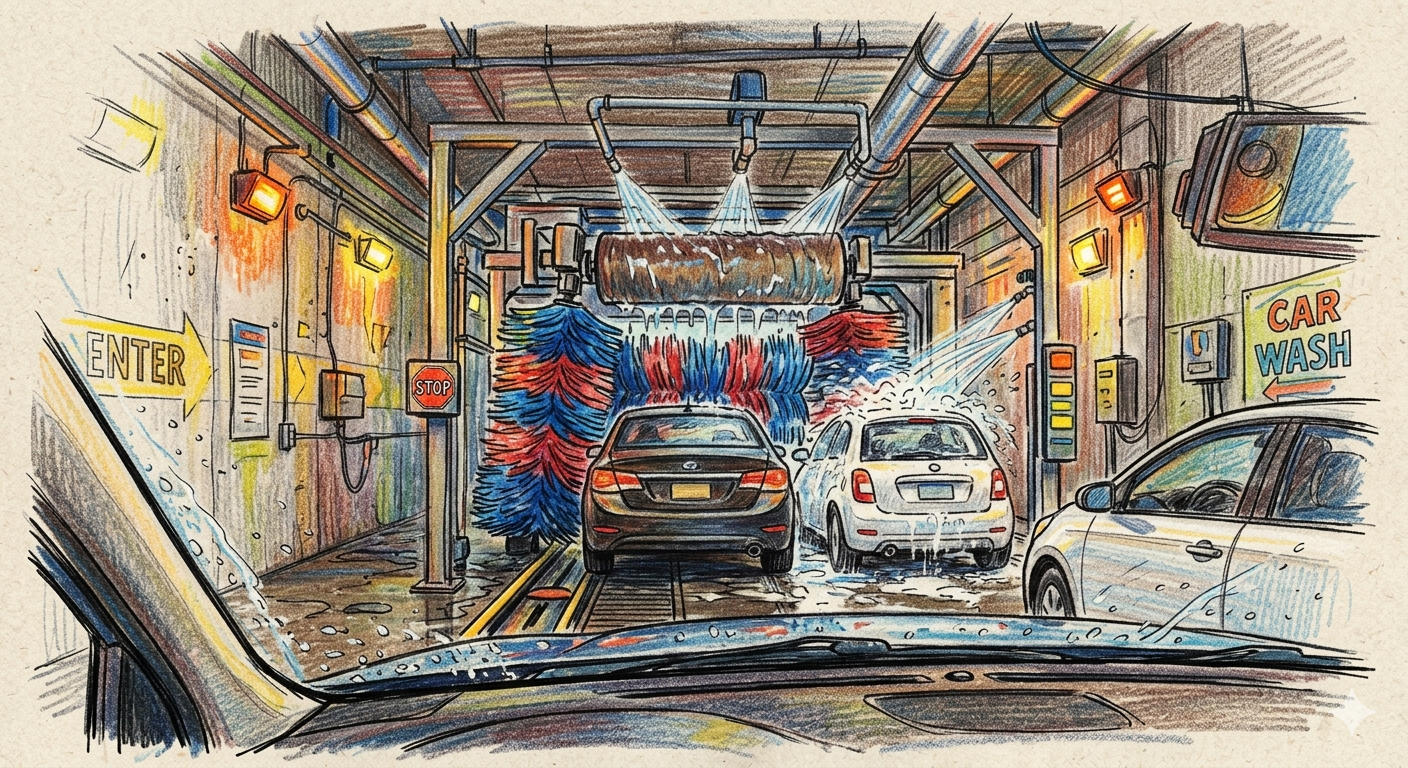
When you’re looking for a quick and convenient way to keep your car clean, a tunnel car wash seems like the obvious choice. They’re fast, they’re inexpensive, and there’s one on almost every corner in Boise. But what seems like a bargain comes at a hidden cost—one that many vehicle owners don’t discover until they look closely at their paint finish. The reality is that tunnel car washes, despite their convenience, are one of the worst enemies your vehicle’s clear coat can face.
At Eagle Star Detail, we’ve spent years perfecting the art of paint protection and restoration. Every day, we encounter vehicles that have been damaged by automatic tunnel washes, and we help customers understand why switching to professional mobile detailing is the smartest investment they can make in their vehicle’s appearance and value.
What Happens Inside a Tunnel Car Wash
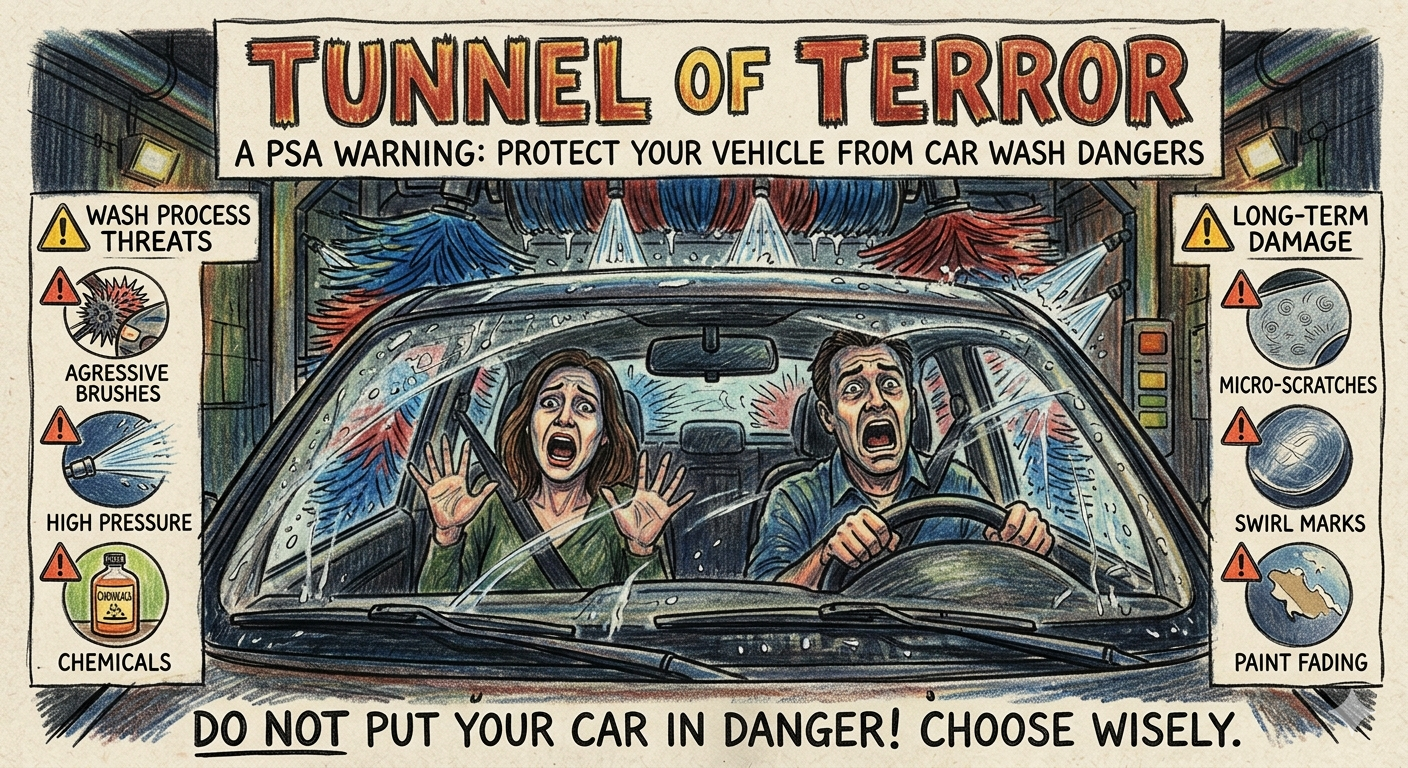
To understand why tunnel washes are so damaging, it helps to know how they actually work. Unlike hand washing, which uses controlled pressure and soft materials, tunnel car washes rely on a series of automated systems that move your vehicle through a process that combines harsh chemicals, rotating brushes or cloths, high-pressure water jets, and aggressive drying equipment.
The process typically involves:
- Pre-spray with harsh alkaline cleaners
- Contact with rotating brushes or strip cloth materials that repeatedly drag across your paint
- High-pressure water sprays that force water into crevices and seals
- Automated drying systems that can leave water spots and mineral deposits
On the surface, this sounds efficient. In reality, it’s a collision course between your paint and abrasive materials that can’t be controlled for the specific condition or needs of your vehicle.
The Paint Damage Problem: What Tunnel Washes Leave Behind
Swirl Marks and Micro-Scratches
The most immediate and visible damage from tunnel car washes is swirl marks—those fine, circular scratches that become especially noticeable in bright sunlight. These aren’t inevitable signs of aging; they’re the direct result of brushes, cloth strips, and guide rails rubbing against your paint dozens of times.
The cloths and brushes used in tunnel washes are cleaned between each vehicle, but they’re never individually inspected or replaced with the frequency they should be. Dirt particles and debris accumulate on these materials, turning them into microscopic sandpaper that scratches every vehicle that passes through.
When these micro-scratches accumulate, your paint’s finish becomes dull and lacks the depth and reflection that a properly maintained surface should have. These marks also accelerate oxidation because they break the protective clear coat and expose the underlying paint layers.
Clear Coat Failure
Your vehicle’s paint system consists of multiple layers: base color coat, and a protective clear coat on top. The clear coat is what gives your paint its shine, depth, and protection against UV rays, contaminants, and oxidation.
Tunnel washes are particularly aggressive on clear coats. The combination of harsh chemicals, abrasive contact, and high-pressure water accelerates clear coat deterioration. Over time, your paint becomes increasingly vulnerable to:
- UV damage and fading
- Oxidation and chalking
- Water spot staining
- Contaminant adhesion
Once the clear coat starts failing, repairs become exponentially more expensive. You’re no longer looking at a simple detail—you’re looking at paint correction, or in severe cases, a complete repaint.
Water Spots and Mineral Deposits
Tunnel car washes use recycled water in many cases, which means it’s loaded with minerals and contaminants. After the wash, your vehicle is dried by massive air dryers that simply blow the water around rather than actually removing it completely.
This leaves behind water spots—rings of mineral deposits that etch into your clear coat. These aren’t just cosmetic; they represent areas where the clear coat’s protective barrier has been compromised. The longer water spots sit, the deeper they etch, until they become permanent etching that requires professional paint correction to remove.
Damage to Trim, Seals, and Rubberized Components
Tunnel washes don’t discriminate—the high-pressure jets and rotating brushes come into contact with more than just your paint. Rubber seals around doors and windows, plastic trim, window trim, and weatherstripping all take damage from the aggressive process.
This can lead to:
- Water leaks into door panels and door jambs
- Degraded weatherstripping that allows water and air infiltration
- Faded or damaged trim pieces
- Compromised seals that lead to rust and interior damage
The Chemical Problem: Harsh Soaps and Alkaline Cleaners
Most tunnel car washes use heavily alkaline pre-wash chemicals designed to break down dirt and oil quickly. While these are effective at cleaning, they’re also extremely aggressive on clear coat and paint.
These alkaline cleaners can:
- Strip away protective waxes and sealants you’ve invested in
- Cause microscopic etching of the clear coat
- Damage rubber and plastic components
- Leave chemical residue that attracts dirt and contaminants
If you’ve recently had a ceramic coating applied to your vehicle, certain tunnel car washes can be especially damaging because the harsh chemicals are designed to strip coatings and protective layers.
The Speed Problem: One Size Fits None
Tunnel car washes operate on a relentless schedule. A vehicle goes through the same process whether it’s a luxury Mercedes with a premium paint job or a work truck covered in mud. There’s no assessment of your vehicle’s specific condition, no customization based on paint type or existing damage, and no allowance for vehicles that need extra care.
Your vehicle deserves individualized attention. Different paint finishes require different care approaches. Vehicles with existing ceramic coatings, new vehicles with delicate finishes, and older vehicles with oxidized paint all need specialized handling.
The Real Cost of Tunnel Car Wash Damage
People choose tunnel car washes to save money, typically paying $10-20 per wash. But this is a classic case of penny wise, pound foolish.
Consider this: Professional paint correction to remove swirl marks and water spots can cost $500-$2,000 depending on severity. A full paint correction and ceramic coating application can run $1,500-$5,000+. A complete repaint due to failed clear coat can cost $3,000-$10,000 or more.
If you’re visiting a tunnel car wash every 2-4 weeks and accumulating damage that will eventually require professional correction, you’re not saving money—you’re just deferring an increasingly expensive bill.
Additionally, damage to your paint finish reduces your vehicle’s resale value. When potential buyers see swirl marks, water spots, and oxidized paint, they know the vehicle hasn’t been cared for properly, and they’ll negotiate accordingly.
Why Professional Mobile Detailing Is Different
At Eagle Star Detail, we approach vehicle cleaning with an entirely different philosophy. Our premium mobile detailing service in Boise includes:
Hand Washing with Proper Technique
We use the two-bucket method (one soapy, one rinse) to prevent dirt from being dragged across your paint. Our technicians inspect each vehicle and use appropriate pressure and soft materials suitable for your specific paint finish.
Premium, Paint-Safe Products
We use professional-grade, pH-neutral soaps specifically formulated to clean effectively without stripping protective coatings. Our cleaning solutions are designed to work with, not against, your vehicle’s finish.
Assessment and Customization
Every detail begins with an assessment of your vehicle’s condition. We identify existing damage, adjust our approach accordingly, and recommend protective treatments tailored to your vehicle’s needs.
Protection Focus
After cleaning, we ensure your paint is properly protected. Whether through professional waxing, sealant application, or ceramic coating application, we apply protective layers that enhance your paint’s appearance and durability.
Attention to Detail
Unlike automated systems, we pay careful attention to trim, seals, wheels, and all components of your vehicle. We protect areas that need protection and address specific concerns you identify.
The Ceramic Coating Solution
For vehicle owners serious about long-term paint protection, professional ceramic coatings represent a transformation compared to tunnel car washes. A ceramic coating creates a chemical bond with your clear coat, forming a protective layer that provides:
- Superior protection against UV damage
- Resistance to water spotting and chemical etching
- Reduced need for frequent detailing
- Enhanced gloss and depth of finish
- Easier cleaning and maintenance
Once you’ve invested in a quality ceramic coating, the last place you want your vehicle is a tunnel car wash. The coating requires maintenance with proper techniques and products—exactly what professional mobile detailing provides.
Making the Switch: What You Need to Know
If you’re accustomed to regular tunnel car washes, switching to professional mobile detailing is easier than you might think:
Initial Assessment: Schedule a professional detail where we assess your vehicle’s current condition and create a maintenance plan.
Paint Correction (if needed): If your vehicle has existing swirl marks or water spots, we can address these with our professional paint correction services.
Protective Treatment: We’ll recommend and apply the appropriate protective coating—whether that’s a ceramic coating for maximum protection or professional waxing/sealant for regular maintenance.
Ongoing Maintenance: Schedule regular mobile details on a schedule that fits your needs (typically every 4-6 weeks for optimal protection).
Invest in Your Vehicle’s Future
Your vehicle is one of your most significant investments. Treating it with respect means using professional care rather than exposing it to the damage of tunnel car washes.
The convenience of a tunnel wash isn’t worth the long-term damage to your paint, trim, and overall vehicle condition. Every time you consider a quick tunnel wash, remember the swirl marks that accumulate, the clear coat that deteriorates, and the eventual need for expensive paint correction or repainting.
At Eagle Star Detail, we’re committed to keeping your vehicle looking its best while protecting its long-term value. Our mobile service comes to you, our techniques are proven to protect your paint, and our team has the expertise to address whatever condition your vehicle is in.
Don’t let tunnel car washes damage what matters. Schedule your premium detail today and experience the difference that professional, customized vehicle care makes.
Common Questions About Tunnel Washes and Professional Detailing
How often should I detail my vehicle if I stop using tunnel washes? For regular maintenance without ceramic coating, we recommend professional detailing every 4-6 weeks. For ceramic-coated vehicles, monthly maintenance helps maximize the coating’s performance.
Can professional detailing remove swirl marks? Yes. Our paint correction services can remove or significantly reduce swirl marks, though the extent depends on their depth and severity.
Is ceramic coating worth it compared to regular waxing? Absolutely. While professional waxing provides protection, ceramic coatings offer superior durability, easier maintenance, and longer-lasting protection—typically 2-5 years compared to 3-6 months for waxing.
What’s the best way to maintain a vehicle if I want to avoid damage? Professional mobile detailing combined with ceramic coating is the optimal approach. This combination provides maximum protection while eliminating the damage caused by tunnel washes.
Can I still go to car washes after ceramic coating? We recommend avoiding tunnel washes altogether, especially after investing in ceramic coating. If you must use automated systems, contactless washes are far preferable to brush or cloth systems.
About the Author
David Faustina
Founder & Certified Ceramic Coating Installer
David Faustina is a professionally trained and certified detailer specializing in paint correction, ceramic coating installation, and RV detailing. As founder of Eagle Star Detail, he personally works on every vehicle to ensure premium results and customer satisfaction.
Ready to experience professional detailing?
Eagle Star Detail specializes in professional mobile detailing throughout Boise and the Treasure Valley.