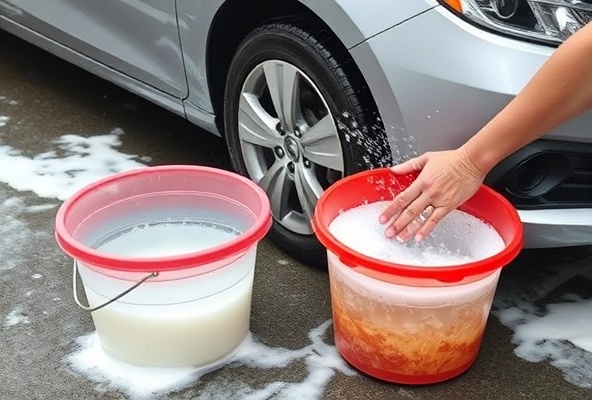
How you wash your car matters. Improper washing technique is the leading cause of swirl marks and paint damage. Let’s explore the professional approach to keeping your vehicle spotless without damaging the finish.
The Two-Bucket Wash Method
The two-bucket method is the gold standard for safe vehicle washing. Here’s why and how:
What You’ll Need
- 2 clean 5-gallon buckets
- High-quality car wash soap (pH-balanced)
- Soft microfiber wash mitt
- Grit guards for both buckets
- Hose with adjustable nozzle
- Microfiber drying towels
The Process
Bucket 1: Soapy Water Fill with car wash soap and warm water. This is where you’ll rinse your mitt while washing.
Bucket 2: Rinse Water Fill with clean water only. This bucket has a grit guard at the bottom to trap sediment.
The Technique:
- Rinse your vehicle thoroughly to remove loose dirt
- Dip your wash mitt in the soapy bucket
- Wash one panel at a time using straight lines, not circular motions
- Rinse the mitt in the rinse bucket, wringing out trapped dirt
- Repeat until the entire vehicle is washed
- Perform a final rinse with clean water
Key Principles for Safe Washing
1. Straight Lines, Not Circles
Always wash in straight lines from top to bottom. Circular motions cause swirls and are hard to remove.
2. Top to Bottom
Wash from roof to tires. The lower panels are dirtier and should be washed last to avoid dragging dirt to clean areas.
3. Change Water Frequently
Empty and refill your buckets regularly. Dirty water will redeposit dirt and grit onto your paint.
4. Use Quality Wash Soap
Dish soap and household cleaners strip protective coatings. Use pH-balanced car wash soap designed for automotive paint.
5. Microfiber Matters
Microfiber wash mitts and towels are gentler on paint than cotton or regular sponges.
6. Avoid Pressure Washers on Paint
High-pressure water can damage paint and clear coat. Keep pressure washers for wheels and undercarriage only.
Drying Techniques
After washing, proper drying prevents water spots:
- Microfiber Drying Towels: Use clean, soft towels for drying
- Chamois Cloths: Traditional option, effective but requires more care
- Blow Driers: Air drying tools prevent swirl marks
- Synthetic Chamois: Modern alternative to traditional chamois
Technique: Gently squeeze water out rather than rubbing. Pat dry in straight motions.
What NOT to Do
❌ Don’t use automatic car washes - Brushes and cloth cause swirls ❌ Don’t dry with dirty towels - Trapped dirt creates scratches ❌ Don’t use household cleaners - They damage clear coat ❌ Don’t wash in direct sunlight - Water spots form quickly ❌ Don’t use regular sponges - They hold dirt and trap particles
Seasonal Washing Tips
Winter
Wash more frequently to remove salt and grime. Avoid cold water that can damage rubber seals.
Spring & Fall
Wash after storms to remove pollen, sap, and bug residue before they etch the paint.
Summer
Wash frequently to remove UV-exposed contaminants. Consider indoor parking when possible.
Protecting Your Paint Between Washes
- Regular Waxing: Apply wax every 3-6 months for protection and easier washing
- Avoid Parking Under Trees: Bird droppings and sap damage paint quickly
- Use a Car Cover: Protects from environmental contaminants
- Park in Shade: UV protection extends clear coat life
When to Seek Professional Help
If you notice:
- Heavy swirl marks and scratches
- Water spots that won’t remove
- Oxidation or dull finish
- Bird droppings or sap damage
It’s time for professional paint correction and protection.
Professional Detailing vs. DIY
While proper DIY washing maintains your vehicle, professional detailing provides:
- Advanced equipment and products
- Expert paint assessment
- Paint correction services
- Long-term protection solutions
- Warranty coverage
Final Thoughts
Washing your car correctly is the first step in paint protection. Combined with regular waxing or ceramic coating, proper washing technique keeps your vehicle looking showroom-fresh for years.
Questions about your vehicle’s care? Contact Eagle Star Detail for professional detailing services and expert advice on maintaining your paint.
About the Author
David Faustina
Founder & Certified Ceramic Coating Installer
David Faustina is a professionally trained and certified detailer specializing in paint correction, ceramic coating installation, and RV detailing. As founder of Eagle Star Detail, he personally works on every vehicle to ensure premium results and customer satisfaction.
Ready to experience professional detailing?
Eagle Star Detail specializes in professional mobile detailing throughout Boise and the Treasure Valley.