The Complete Chemistry of Ceramic Coatings: Types, Applications, and Performance Analysis
When you hear “ceramic coating,” you might imagine a magical shield that makes your vehicle look glossy forever. But the reality is far more interesting—and scientific. Understanding the chemistry behind ceramic coatings helps you make informed decisions about protecting your vehicle, RV, or marine vessel.
Whether you’re in Boise, Eagle, Meridian, or throughout the Treasure Valley, ceramic coatings have become the gold standard for long-term vehicle protection. But what exactly makes them work? How do they differ? And which type is right for your specific application?
This comprehensive guide explores the science, types, and performance of ceramic coatings across auto, marine, and RV applications. We’ll break down the chemistry in accessible language while exploring the real-world advantages and disadvantages of different coating systems.
Understanding the Chemistry: What Makes Ceramic Coatings Work?
At its core, a ceramic coating is a liquid polymer that chemically bonds to your vehicle’s clear coat, creating a hard, protective layer. But understanding the chemistry is where things get fascinating.
The Molecular Structure
Ceramic coatings are primarily composed of silicon dioxide (SiO2) particles suspended in a liquid carrier. These nano-particles are incredibly small—we’re talking about particles that are thousands of times smaller than the width of a human hair.
When you apply a ceramic coating, the liquid carrier evaporates or chemically reacts, leaving behind the silicon dioxide particles. These particles cross-link and chemically bond to your vehicle’s existing clear coat, creating a permanent or semi-permanent bond at the molecular level.
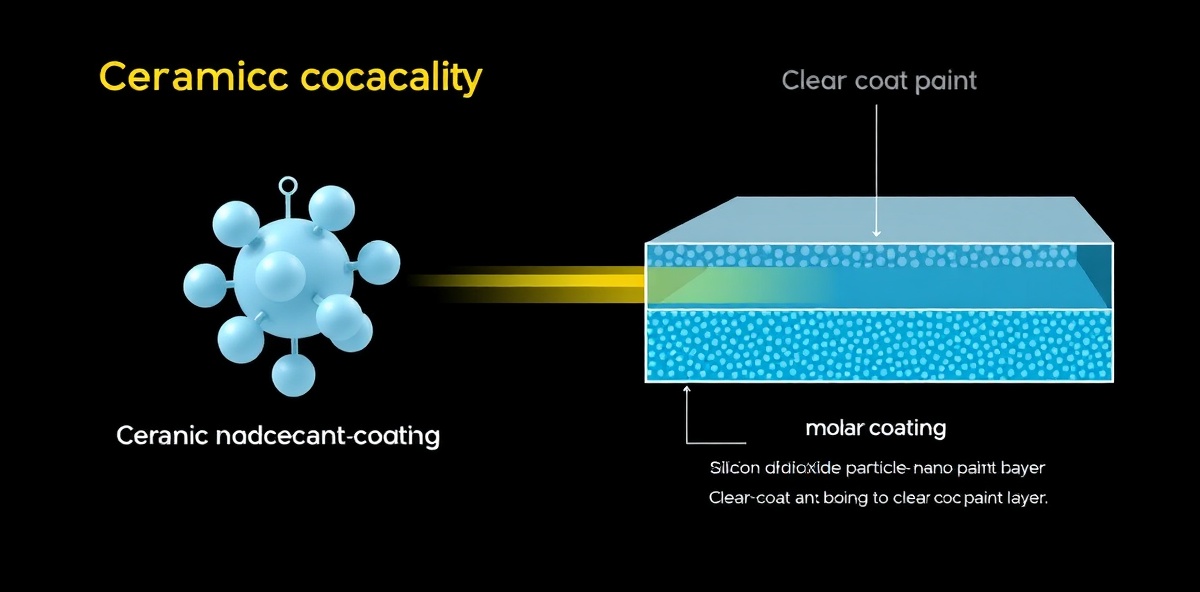
The image above shows how ceramic coating nano-particles bond at the molecular level to create a protective layer
The Bonding Process
The key difference between a ceramic coating and traditional wax comes down to bonding chemistry:
Traditional Wax: Uses physical adhesion—it sits on top of your clear coat like a coating. When the wax breaks down (usually in 3-6 months), it simply washes away.
Ceramic Coating: Forms a chemical bond with your clear coat. The silicon dioxide particles create covalent bonds with the oxygen in your clear coat’s surface. This creates a much stronger, longer-lasting connection.
Hardness and Protection
The hardness of a ceramic coating comes from the silicon dioxide network it creates. Silicon dioxide is the same material that makes up glass and quartz—substances known for their extreme hardness.
When properly applied, professional ceramic coatings can achieve a hardness rating of 9H on the Mohs hardness scale (the same scale used to measure mineral hardness). This hardness provides:
- Scratch resistance: The coating resists light scratches and swirl marks that would damage unprotected paint
- Chemical resistance: The hard surface resists etching from bird droppings, tree sap, and mineral deposits
- UV protection: The coating blocks 99% of UV radiation that would otherwise oxidize your clear coat
- Hydrophobic effect: The ceramic surface repels water, creating the famous “beading” effect
The Hydrophobic Effect: How Water Beads
One of the most visible properties of ceramic coatings is hydrophobia—the water-repelling characteristic that makes water bead up into perfect little spheres.
This happens because ceramic coatings create an extremely smooth surface with very low surface tension. Water molecules naturally form the smallest possible surface area (a sphere) when they encounter a surface they can’t wet.
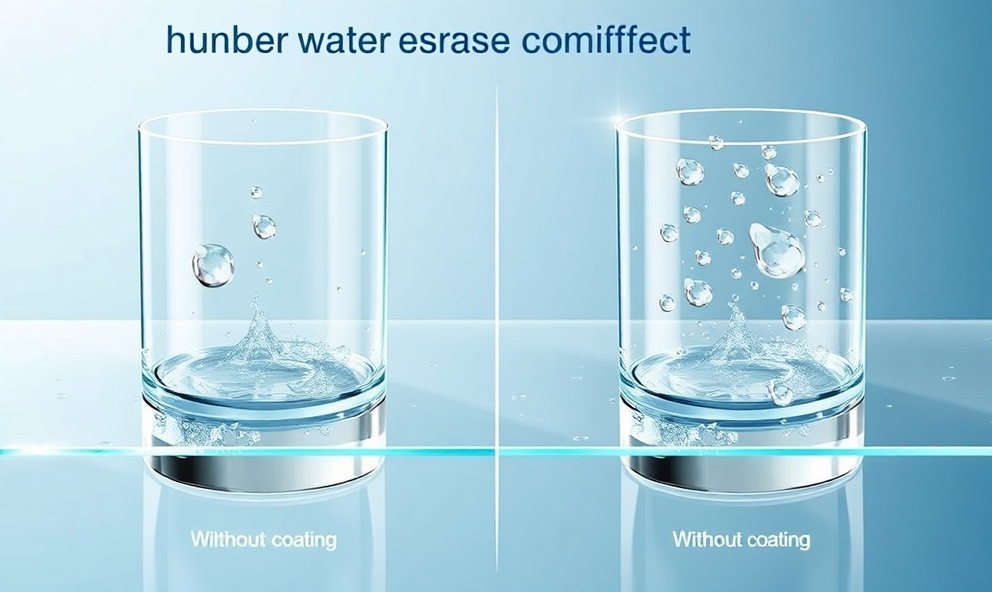
The hydrophobic effect: water beads and rolls away from ceramic-coated surfaces, making cleaning easier
This hydrophobic effect has practical advantages:
- Water and contaminants don’t bond to the surface as strongly
- Dirt and grime wash away more easily
- Reduced water spotting from mineral deposits
- Better visibility in rain (water beads away from windows and lights)
This is especially valuable for RV owners in the Treasure Valley, where mineral-rich water from sprinklers and rain can create stubborn water spots on unprotected surfaces.
Types of Ceramic Coatings: A Comprehensive Breakdown
Not all ceramic coatings are created equal. Understanding the differences is crucial to choosing the right protection for your vehicle.
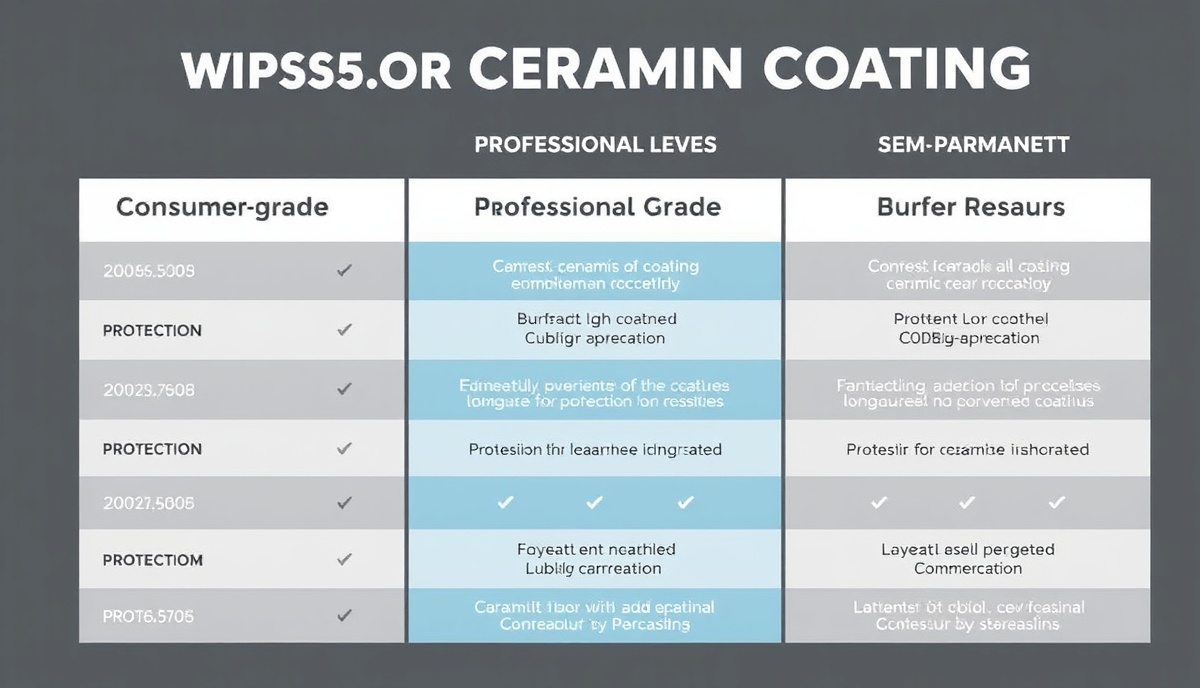
Different ceramic coating types offer varying levels of protection and durability
Type 1: Consumer-Grade Ceramic Coatings
What They Are: Consumer-grade ceramic coatings are spray-on products available at auto parts stores and online. They’re designed for DIY application without professional equipment or expertise.
Chemistry: These products typically contain lower concentrations of silicon dioxide (usually 5-20%) and use volatile organic compounds as carriers. They cure through evaporation and UV exposure rather than chemical bonding.
Durability: 3-6 months typically, with degradation beginning immediately
Advantages:
- Affordable ($20-50 per bottle)
- Easy to apply at home
- Immediate glossy appearance
- Better water beading than untreated paint
- Good for short-term protection
Disadvantages:
- Very short lifespan compared to professional coatings
- Uneven application often results in streaking
- Minimal scratch resistance
- No warranty protection
- Requires frequent reapplication
- Doesn’t provide true UV protection at deeper paint layers
Best For: Budget-conscious vehicle owners looking for temporary enhancement rather than long-term protection. Not recommended for vehicles you plan to keep or protect seriously.
Type 2: Professional-Grade Ceramic Coatings
What They Are: Professional-grade ceramic coatings are applied by trained technicians with specialized equipment, preparation processes, and curing conditions. These represent the industry standard for automotive protection.
Chemistry: Professional coatings contain 70-90% silicon dioxide (SiO2) and proprietary additives. They use organic solvents and require specific application conditions (temperature, humidity, ventilation). The application process involves controlled cross-linking and curing, often with UV or LED curing lamps.
Durability: 2-5 years with proper maintenance, depending on specific product and driving conditions
Advantages:
- Superior hardness (8-9H Mohs rating)
- Excellent UV protection protecting both the coating and underlying clear coat
- True chemical bond creates permanent or near-permanent results
- Professional warranty coverage (often 2-5 years)
- Significant reduction in water spotting
- Outstanding gloss enhancement
- Superior dirt release and self-cleaning properties
- Can be applied over properly prepped surfaces
- Repairs can be performed if damaged
Disadvantages:
- Higher cost ($300-1500+ depending on vehicle size)
- Requires professional application
- Extended curing period before full protection (24-72 hours)
- Must maintain specific environmental conditions during application
- Requires professional-grade surface preparation
- Touch-ups by amateurs can cause issues
Best For: Vehicle owners serious about long-term protection. Highly recommended for expensive vehicles, daily drivers, and anyone living in harsh climates. Perfect for RV owners in the Treasure Valley who face intense sun and environmental challenges.
Type 3: Semi-Permanent Bond Coatings (Hybrid Systems)
What They Are: Semi-permanent coatings represent a middle ground between consumer and professional grades. Some are available for professional application, while others can be applied by serious enthusiasts with proper technique.
Chemistry: These coatings typically contain 30-70% silicon dioxide with polymer resins that create a hybrid matrix. They may use different curing mechanisms than pure ceramic coatings—some cure through evaporation with UV initiation, others through moisture-curing or thermal-curing processes.
Durability: 6-18 months with proper maintenance
Advantages:
- Better than consumer-grade durability
- More affordable than premium professional coatings
- Can offer 7-8H hardness
- Good water beading effect
- Some offer DIY application options
- Better gloss than unprotected paint
- Good choice for maintenance between professional applications
Disadvantages:
- Shorter lifespan than premium professional coatings
- Variable application quality
- Less chemical bond strength than true ceramic systems
- May not offer warranty protection
- Requires more frequent reapplication than professional coatings
- Mixed results depending on application technique
Best For: Budget-conscious buyers wanting better protection than consumer spray coatings. Can be good for seasonal vehicles or as an intermediate step between ceramic applications.
Application-Specific Performance: Auto vs. Marine vs. RV
Different vehicle types face different challenges. Understanding how ceramic coatings perform in specific applications is crucial.
Automotive Applications
Challenges:
- Road salt and chemicals in winter (especially relevant for Boise winter roads)
- Frequent washing and drying cycles
- Exposure to fuel and exhaust
- Brake dust accumulation
- Tar and road debris
How Ceramic Coatings Help:
- Chemical resistance stands up to road salt and petroleum products
- Reduced water spotting from frequent washing
- Dirt release prevents brake dust bonding
- UV protection preserves clear coat between washes
- Hardness resists swirl marks from washing
Best Choice: Professional-grade ceramic coating for regular drivers, especially those in northern climates like Boise where road salt is common.
Marine Applications
Challenges:
- Constant saltwater exposure (most corrosive environment)
- UV exposure intensified by water reflection
- Moisture and humidity accelerate oxidation
- Barnacle and algae growth
- Extreme temperature variations
How Ceramic Coatings Help:
- Silicon dioxide provides excellent salt-resistance
- Hydrophobic properties prevent water intrusion into micro-cracks
- Chemical bonding prevents water from reaching underlying paint
- UV protection critical for preventing salt-induced oxidation
- Self-cleaning properties reduce need for frequent washing
Special Consideration: Marine-specific ceramic coatings often include additional UV absorbers and are formulated for saltwater resistance. Professional application is essential for marine vessels.
Best Choice: Professional-grade marine ceramic coating (often a specialized formulation) applied by experienced technicians familiar with marine environments.
RV Applications
Challenges:
- Extended outdoor exposure without garage protection
- Intense high-altitude UV exposure (Boise and Treasure Valley are at 2,800+ feet elevation)
- Large surface area makes comprehensive protection difficult
- Complex surfaces (roof, sides, slides) with multiple materials
- Extended storage periods with environmental exposure
- Oxidation from sun exposure between camping trips
How Ceramic Coatings Help:
- Exceptional UV protection essential at high altitude
- Long-term protection between uses
- Easier maintenance between camping trips
- Hydrophobic roof coating prevents water pooling
- Protects various RV materials (painted surfaces, composite panels)
- Glossy finish maintains appearance for years
Special RV Considerations: RV ceramic coatings must handle:
- Temperature variations from hot days to cold nights
- Extended storage periods in the sun
- Difficulty in washing large surfaces
- Multiple material types (aluminum, fiberglass, paint)
Best Choice: Professional-grade ceramic coating specifically formulated for RVs, applied by technicians experienced with RV-specific challenges. This is especially important in the Treasure Valley where intense high-altitude sun exposure requires premium protection.
System X Ceramic Coatings: Professional Excellence
At Eagle Star Detail, we specialize in System X ceramic coatings—a professional-grade system that represents the pinnacle of ceramic coating technology.
System X coatings offer:
Superior Formulation:
- 85%+ silicon dioxide concentration
- Professional-grade bonding agents
- USA-manufactured quality standards
- Tested for automotive, marine, and RV applications
Extended Durability:
- 2-5 year protection with standard maintenance
- Lifetime warranty options for premium applications
- Certified application ensures proper bonding
Proven Performance:
- 9H hardness rating
- Exceptional UV protection
- Outstanding chemical resistance
- Reliable water beading and self-cleaning
Professional Installation:
- Proper surface preparation (critical for bonding)
- Controlled application environment
- Professional-grade curing
- Warranty coverage and ongoing support
For RV owners throughout the Treasure Valley—from Boise and Eagle to Meridian, Star, Garden City, and Middleton—System X ceramic coating provides the protection that stands up to our unique environmental challenges.
Advantages and Disadvantages: The Complete Picture
Advantages of Professional Ceramic Coatings
Long-Term Cost Savings: While the upfront investment is higher ($500-1500 for comprehensive coverage), the durability means fewer reapplications. Over 5 years, a ceramic-coated vehicle requires less maintenance than a vehicle reapplied with wax every 6 months.
Superior Protection: Chemical bonding provides protection that sits-on-top products simply can’t match. Your clear coat stays fresher longer, maintaining value and appearance.
Easy Maintenance: Hydrophobic properties mean less frequent washing needed, and when you do wash, dirt comes off more easily. Perfect for busy RV owners.
Aesthetic Appeal: Professional ceramic coatings enhance gloss and clarity, making colors appear richer and finishes more dramatic.
Environmental Resistance: The Treasure Valley’s intense sun, mineral-rich water, and environmental contaminants don’t penetrate ceramic coatings the way they penetrate clear coat.
Disadvantages of Professional Ceramic Coatings
High Initial Cost: Professional application isn’t cheap. Budget $500-2000 for comprehensive vehicle coverage.
Extended Curing Time: You typically can’t use your vehicle for 24-72 hours after application while the coating fully cures.
Requires Maintenance: Professional ceramic coatings aren’t truly “permanent.” They require periodic maintenance and eventual reapplication (typically every 2-5 years).
Professional Application Required: DIY ceramic coating application often results in uneven coverage and poor bonding. This isn’t a cost-effective DIY project.
Paint Condition Dependent: Ceramic coatings don’t fix damaged paint—they lock in the current condition. Pre-existing scratches, swirls, and oxidation need correction before coating application.
Not a Scratch-Proof Solution: While resistant to minor scratches, ceramic coatings will damage with impact or abrasion. They’re protective, not invincible.
Chemical Bonding vs. Physical Adhesion: Understanding the Difference
This distinction is crucial to understanding why ceramic coatings outperform traditional protection methods.
Physical Adhesion (Traditional Wax): Wax molecules adhere to your clear coat through weak intermolecular forces. These bonds break down through oxidation, UV exposure, and washing action. This is why wax needs reapplication every few months.
Chemical Bonding (Ceramic Coatings): Ceramic coatings create covalent bonds—actual chemical bonds—with oxygen molecules in your clear coat’s surface. These bonds don’t break down the same way. While they do degrade over time through oxidation and environmental exposure, the degradation is much slower than physical adhesion.
This chemical bonding is why professional ceramic coatings maintain their hydrophobic properties and protective function for 2-5 years, compared to wax’s 3-6 months.
Environmental Factors: How Climate Affects Ceramic Coating Performance
Your geographic location significantly impacts ceramic coating longevity and performance.
High-Altitude UV Exposure (Boise, Eagle, Treasure Valley)
Boise sits at 2,800+ feet elevation, meaning significantly more intense UV exposure than lower elevations. UV radiation increases roughly 10% for every 1,000 feet of elevation gain.
This means:
- Ceramic coatings in Boise experience more aggressive UV breakdown
- Professional UV-protected ceramic coatings are essential (not optional)
- Reapplication cycles may be shorter than in lower elevations
- RV owners face even more exposure due to extended outdoor storage
System X coatings are specifically formulated with UV blockers to handle high-altitude exposure, making them ideal for Treasure Valley applications.
Salt and Chemical Exposure
Boise winters involve road salt and chemical treatments. These are highly corrosive to unprotected clear coat. Ceramic coatings provide the chemical resistance needed to protect against:
- Sodium chloride (road salt)
- Calcium chloride (alternative de-icing agent)
- Magnesium chloride
- Sand and grit containing reactive minerals
Professional ceramic coatings create a barrier that prevents these chemicals from reaching your clear coat.
Mineral-Rich Water (Sprinklers and Rain)
The Treasure Valley’s mineral-rich water creates persistent water spotting on unprotected surfaces. Ceramic coatings’ hydrophobic properties prevent water bonding, significantly reducing mineral deposits.
This is especially important for RV owners who often park in one location for extended periods, where sprinkler water can create extensive spotting.
Long-Term Maintenance: Protecting Your Investment
Applying a ceramic coating is just the beginning. Proper maintenance extends its life and preserves its protective properties.
Professional Maintenance Schedule
Every 2-3 Months:
- Hand wash with pH-neutral soap
- Gentle drying to prevent water spotting
- Visual inspection for coating condition
Every 6 Months:
- Professional inspection
- Assessment of hydrophobic properties
- Identification of any problem areas
Every 12-24 Months:
- Professional detailing with maintenance wash
- Possible top-up coating application
- Performance assessment
Every 2-5 Years:
- Full reapplication (depending on specific coating and environmental exposure)
- Paint correction if needed before reapplication
Protecting Your RV in the Treasure Valley
For RV owners in Eagle, Boise, Meridian, Middleton, and throughout the Treasure Valley, seasonal maintenance is especially important:
Spring:
- Deep cleaning after winter exposure
- Assessment of UV protection integrity
- Prepare for intense summer sun
Summer:
- Regular washing to prevent mineral buildup (especially important with sprinkler use)
- Monitor for UV damage
- Keep hydrophobic properties strong with appropriate products
Fall:
- Final deep cleaning before winter storage
- Assess coating condition before extended storage
- Address any spring/summer damage
Winter:
- Protective washing to remove road salt
- Monitor for cold-weather damage
- Prepare for spring sun exposure at high altitude
The Science Behind System X Professional Application
Eagle Star Detail uses System X ceramic coatings specifically because of their superior chemistry and performance profile.
Superior SiO2 Concentration: System X coatings contain the highest concentration of premium silicon dioxide, ensuring maximum hardness and durability.
Advanced Bonding Agents: Proprietary bonding chemistry creates extremely strong covalent bonds with clear coat surfaces.
Professional-Grade Curing: System X coatings are applied in controlled environments with precise temperature and humidity monitoring, ensuring optimal cross-linking and bonding.
Proven Performance: System X coatings have years of real-world performance data across automotive, marine, and RV applications.
Comprehensive Warranty: Professional application of System X coatings comes with manufacturer warranty protection, giving you confidence in your investment.
Making the Right Choice for Your Vehicle
Whether you drive a daily commuter in Boise, maintain an RV for Treasure Valley adventures, or own a boat on a local reservoir, ceramic coating protection makes sense.
The key is understanding your specific needs:
Choose Consumer-Grade if:
- You want temporary glossiness
- Budget is extremely limited
- You don’t mind frequent reapplication
- You’re not concerned about long-term protection
Choose Semi-Permanent if:
- You want better protection than consumer spray
- Budget is moderate
- You’re willing to reapply every 12-18 months
- You want to try ceramic coating before investing in professional application
Choose Professional-Grade if:
- You want actual long-term protection (2-5+ years)
- You plan to keep your vehicle or want to maintain its value
- You live in harsh climates (like Boise’s high-altitude, mineral-rich environment)
- You want warranty protection and professional support
- You own an RV and understand the value of serious UV and environmental protection
Conclusion: The Chemistry That Protects Your Investment
Ceramic coatings represent a genuine advancement in vehicle protection, backed by real chemistry and proven performance. Understanding the science—from silicon dioxide nano-particles to covalent bonding to hydrophobic effects—helps you make informed decisions about protecting your vehicle.
For RV owners throughout the Treasure Valley, professional ceramic coating protection is almost essential. The combination of high-altitude UV exposure, mineral-rich water, and extended outdoor storage makes professional protection a worthwhile investment.
Eagle Star Detail specializes in System X professional ceramic coatings for vehicles, RVs, and marine vessels throughout Boise, Eagle, Meridian, Star, Garden City, and Middleton. We understand the unique challenges of Treasure Valley ownership and apply science-backed protection that delivers real results.
Whether you’re looking to protect a daily driver from Boise winters, prepare an RV for years of outdoor adventure, or maintain a marine vessel, professional ceramic coating provides the chemistry-backed protection your investment deserves.
Ready to protect your vehicle with professional ceramic coating? Contact Eagle Star Detail in the Boise area to discuss System X ceramic coating options for your specific application and vehicle type.
Eagle Star Detail is a certified System X professional ceramic coating installer serving Boise, Eagle, Meridian, Star, Garden City, and Middleton, Idaho. We specialize in automotive, RV, and marine ceramic coating applications throughout the Treasure Valley.
About the Author
David Faustina
Founder & Certified Ceramic Coating Installer
David Faustina is a professionally trained and certified detailer specializing in paint correction, ceramic coating installation, and RV detailing. As founder of Eagle Star Detail, he personally works on every vehicle to ensure premium results and customer satisfaction.
Ready to experience professional detailing?
Eagle Star Detail specializes in professional mobile detailing throughout Boise and the Treasure Valley.